Wednesday, September 15, 2010

And one in URUGUAY!


I was interested to see that the University of Montevideo in Uruguay was dedicating its 7th annual literature conference to Virginia Woolf this coming June, 2011. The call for papers (due February 28th, 2011) makes lovely use of the South American setting of The Voyage Out to explain the thinking behind the focus.

But I cannot remember a more exciting email ever than the one I got a few weeks later inviting me to give one of the talks there. I am still gobsmacked and very excited.

All my fantasies of Tobermory are on hold as I imagine the reality of a few days in Montevideo next June. Wow. In honor of the trip, my student sent me the song "Skipping Down the Street" by My Little Pony which includes the lyric If I'd fallen in love in Montevideo....

I’ll be speaking about The Common Reader and eating a chivito, the national sandwich.

From the CFP:
These South American places imagined by Woolf are an invitation to the possibility of reflecting on her work from a transatlantic perspective, as Victoria Ocampo did in 1929 when she first read A Room of One´s Own. The essay confirmed many of Ocampo´s ideas on the woman-writer, and inspired her to promote critical readings and translations of Virginia Woolf´s work in the River Plate, especially through Sur, the literary journal she founded in Buenos Aires in 1931.
Seventy years after Virginia Woolf´s death, Montevideana VII calls for papers presenting innovative readings, translations, and exchanges in connection with the multiple dialogues which her work continues to establish, either directly or indirectly, with this part of the world.
Abstracts should be submitted by February 28th 2011.
For further information click or email.


Tuesday, September 14, 2010

Two New York Appearances


Part of the quiet around here comes from the overwhelming wave of adminstration that crashed upon my head at the end of my sabbatical. Part of it comes from my need to prepare for two upcoming public events. If you're in New York--or inclined to visit--please come to one or both--and say hello!

On Tuesday, October 16th, I’ll be participating in the post-matinee talk-back of Orlando, Sarah Ruhl’s adaptation of Woolf’s novel. It’s in previews now. 

Then, on Thursday, October 21st at 4:00, I’ll be giving a free, public lecture on my ongoing work as the editor of the Cambridge University Press edition of Mrs. Dalloway at the New York Public Library on 42nd & 5th. My lecture will be the third in a 3-day festival of lectures on Woolf: Jean Mills will speak on Woolf and Jane Harrison on Tuesday at 4:00 and Isaac Gewirtz will speak on the proofs of A Room of One's Own on Wednesday at 4:00. 


Barbara Holland, RIP

Why do I not know her work? She is my new hero. From the Times obit, via the Woolf listserv:
Her fight for ground to stand on as a young woman remained central to her reading of the world. A steady paycheck and self-respect were the keys to her brand of feminism, not the allowance and room of one’s own proposed by Virginia Woolf. “No, Mrs. Woolf,” she wrote in her memoir. “A job, Mrs. Woolf.”
Holland was the author of the essay collection “Endangered Pleasures: In Defense of Naps, Bacon, Martinis, Profanity, and Other Indulgences” (1995) which has risen to the top of my TBR pile. 

Monday, September 13, 2010

Sissinghurst, again

Having loved the op-ed on Sissinghurst earlier this summer, I’m writing a review-essay on Adam Nicolson’s Sissinghurst, a very engaging book about his life as a donor-tenant on the NT site. How engaging is it? As an aristocrat who doesn’t use his title and who lives as a tenant in his grandma’s castle, Nicolson has a wonderfully wry sense of humor about other lords, as here, in a description of a National Trust committee meeting:
When a man called John Smith was proposed as a member, the chairman, Viscount Esher, said ‘I suppose it is a good thing to have a proletarian name on the Committee—anyone know him?’ ‘Yes,’ said the earl of Euston, ‘he is my brother-in-law.’
As the descendant of a long, long line of New Hampshire Smiths (I have the forehead to show it), I loved this.

Wednesday, September 08, 2010

Almanzo Wilder's Farm

Blogging is light because sabbatical is over and administration is heavy. Still, you can get one last taste of summer by clicking on over to Writer's Houses to read my guest post on our visit to Almanzo Wilder's farm.

Thursday, August 26, 2010

Little Magazine Fail

Back in January, 2009, I wrote an essay about Virginia Woolf and my grandmother. It’s a good essay. My parents think it’s good. Some pretty famous Woolf scholars have read and enjoyed it. I hope, one day, to publish it in a little magazine.

I entered it in a contest. It came in second. I was disappointed but still hopeful that it would find a home.

I sent it to the Yale Review. I got my PhD at Yale. Woolf published some essays in The Yale Review in the 1930s. I thought an old-fashioned personal essay that was about the love of reading and a mean Yankee grandmother written by a Yalie might find a home in the Yale Review. It was a longshot, but not utterly insane. The essay had, after all, come in second in a contest.

I called the Yale Review late in the spring of 2009 to check on the status of my essay. “Oh, my goodness!” was the flustered reaction. Profuse apologies for the lack of acknowledgment (not to mention reading or decision) ensued.

In the fall of 2009, eager to move on, I left a voicemail: I am submitting the essay elsewhere. It's still elsewhere. I still hope for news, dimly.

And now, awaiting me in my mail at work, is a note, dated July 28, 2010, from the Yale Review. It’s not a rejection. It’s an apology that, given the intense preparations for the 100th anniversary issue, they won’t be able to get to my essay until June of 2011.

Shame on them.

Wednesday, August 25, 2010

Tobermory


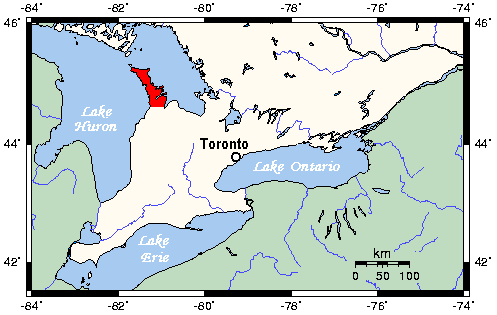
My new obsession is Tobermory, Ontario, a small town on the Bruce Peninsula in Lake Huron, about 7 hours north of Clayton, NY.

Why, you ask, does a woman who spends her summers 7 hours north of New York City dream of spending a week 7 hours further north?

Because she can, dear reader, because she can.

It began with The Wind in the Willows, which accompanied us up to the River for the third year in a row. This year, however, we actually read a couple chapters aloud.

Then, one day, during 30 seconds of the 30 or 40 minutes of television the children watched all summer, there was an ad on t.v. for a new musical based on Kenneth Grahame’s book, set on the St. Lawrence River, and coming to the stage in Gananoque in August.

I was sold. I got tickets. The girls and I got our passports and went. The girls loved it—just adored the show. I thought it was about as good as you might guess good regional theater in Ontario would be: the first act was terrific, the second relied a little too heavily on very rusty jokes (from Grahame’s book, but that was 1933) about a Toad in an Irish woman’s pink dress. It might have been 1950.

I was disappointed, too, to be sitting seven rows back with my little girls, behind a busload of old age pensioners. Why did the 80-year-olds get all the good seats? And it does spoil my time a little to be a good 40 years younger than the average audience member.

Nonetheless, the opening moments were fantastic. The opening scene takes place on the dock—Gananoque’s Singer Theater is the old Canoe Club—and we were treated to a few songs from David Archibald, the play’s co-author and composer.

“Up the River” opens with the actors singing and dancing on the dock. Mole comes on stage, welcomes spring, notices the River in wonder, and then Ratty (who, in the true Canadian spirit, keeps insisting he’s a Beaver. The Canada jokes were pretty tired but this one was funny.) actually rows up to the dock. Mole climbs on board and they row out to a little grass-covered float anchored near the dock. As they picnic, a wet-suited and flippered otter swims up and joins them. That was great summer family theater: witty and funny and worth the price of the ticket. (You can read a review here.)

I also liked David Archibald’s singing: very old school folk with a British Isles/Canadian/Great Lakes tinge (sincere, story-telling, sentimental about a park-like vision of wilderness). His song, “The Rocks of Tobermory” was haunting, so I looked him up.

Then I looked up Tobermory. There is nothing like a map to inflame my dreams of travel. Just look at that peninsula! And then listen to this:
Fathom Five is Canada's first National Marine Park, with over 20 shipwrecks and 19 islands within it's boundaries. The deep clear water and the numerous shipwrecks attract over 8,000 divers each year. Glass bottom boat tours leave Tobermory several times each day to take visitors over the shipwrecks and to Flower Pot Island. The best known island in the Park features two 60 foot high 'flower pots', a lighthouse and walking trails.

When I lie awake worrying about the coming semester and all that I will have to do, I soothe myself back to sleep with promises of a trip to Tobermory next summer…


Tuesday, August 24, 2010

Call it macaroni


I flew through Elizabeth Bowen’s wonderful novel The House in Paris so fast that I had no time to note it here. Instead, I dove into another Bowen, her first novel, The Hotel. From there, I give you this gem of biting British comedy. Poor Miss Pym has had a fight with her friend and she enters the dining room of the hotel with a tear-stained face, too late for luncheon:
Miss Pym looked diffidently at the waiter. She had cut herself off from the omelette, so he shrugged his shoulders and brought her up a plate of macaroni from the servants’ lunch. This the bruised creature pitifully but with evidence of hunger bagan to eat; the traditional British struggle with macaroni brought her down sharply from tragedy to farce.

Monday, August 23, 2010

Woolf’s Reading Notebooks


I mean no disrespect to Brenda Silver in saying that her guide, Virginia Woolf’s Reading Notebooks makes for pretty dull reading. How could it be otherwise? A book that summarizes over forty volumes of Woolf’s notes can only offer the barest indications of the books and subjects noted. For the book to be produced at a reasonable length, it had to be what it is: a dated list of the contents of each of the notebooks.

Having looked at the notebooks from the early 20s, when Woolf was writing Mrs. Dalloway, I marvel anew at her perseverance in dating these very sketchy and various volumes.

I wonder, too, how it might be possible to convey what makes them such amazing documents.

Woolf kept a diary. She also kept draft notebooks for her novels and the essays she wrote alongside them. The reading notebooks are a third kind of notebook, more casual than either of these. Volume 19 is a notebook with cardboard covers, reinforced inside and out on the spine with cloth. Two pairs of metal grommets on the front and back permit it to be bound with laces (and there is a very heavy shoelace attached here, though no longer binding the pages). Inside, are over 100 loose pages, each with two holes. This permitted Woolf to unbind pages from old notebooks and pull old notes as she was revising and expanding essays—for her Common Readers, say. As Silver points out, this can make dating notebooks extraordinarily difficult, as a single notebook (like notebook 26) may contain pages from 1919, 1920 or 21, 1926, 1928, 1935, and 1938.

And in these notebooks, you find Woolf at her most personal, her most uncertain. In the midst of notetaking on a critical book on the novel, she pauses: “(one feels out of one’s depth)”. Of Oedipus Coloneus, read in French, she writes “I did not much enjoy it & found the complexity of the plot annoying.”

It is so rare to hear Woolf speaking in this voice—the voice of a reader in the process of making a judgment. Equally rare, if less vivid, is the chance to leaf through the pages and see how she took notes, what quotations stood out for her. Just seeing that she used the left margin to note page numbers is of interest to me, and, in reading through the notebooks back in June, I found that I had some answers to the kinds of questions readers always want to ask writers—how do you take notes? what kind of pen do you use? when you’re working on a review, how much research do you do? what books influenced you most when writing this one?

Having perused a few of these volumes for my edition of Mrs. Dalloway, I remain grateful to Silver and staunch in my admiration for what she achieved, but I wish her book offered readers more of the romance of reading that I found while working with the actual documents in the Berg Collection.

Friday, August 20, 2010

More on that cheese


We were gone for seven weeks. Six of them we spent, as we have come to do, down the road from my mother-in-law about six miles outside Clayton, New York. It’s incredibly beautiful there, but the gourmet/organic/locavore culture has yet to arrive.

In the middle of our time, we dropped down to Amherst, MA for a week.

The Farmer’s Market there could make you weep for joy: artfully displayed berries, lettuces, sunflowers. Every booth staffed by a thin, tanned New Englander, some liberal arts graduate turned farmer.

I bought a little container of goat cheese for us to take on a picnic. The label said “Healing the earth through organic farming.” That took it a bit too far even for me and I had to laugh. I mean, I know we were in the Happy Valley—I love the happy valley—but the outrageous navel-gazing arrogance of suggesting that a tiny little goat cheese operation was “healing the earth”!

Then, two days later, we pulled out of town and headed back up to Clayton.  On the way to the highway, we passed farmstand after farmstand. We planned to get some corn to bring back for dinner but, with a long drive ahead, it seemed better to wait until we got closer to the River.

It was too late before we remembered that Central New York just doesn’t have that farmstand culture. We had missed our shot at corn. There would certainly be no more organic goat cheese until our next visit to the Happy Valley (or the Union Square Greenmarket). Suddenly, the farm’s slogan didn’t seem so inflated. We laughed at ourselves, wishing a few more people upstate were interested in healing the earth.

Thursday, August 19, 2010

Tallying Summer


After seven weeks away, seven hours from home, six of them spent in our customary little rented cottage just four doors down from my mother-in-law’s, on the shores of the mighty St. Lawrence River, I am surprised by what I missed and what I did not miss about city living:

I did not miss:
  • podcasts
  • NPR
  • television
  • the news in any form
  • running errands
  • calculating the commute time
  • a feeling of constant hurry and competition 

I missed
  • really good cheese
  • fresh produce (up there, it’s a private culture: people have gardens, not farmer’s markets, and the tomatoes were only just arriving as we left)
  • music at dinnertime (somehow, not a habit of my mother-in-law’s at the River, though she listens to it in her home in winter)
  • seeing people on the street who look interesting, look like people I’d like to meet

I am fond of traffic, of street noise, of the subway. I am fond of waking at 4 AM to the sound of an owl, of the sound of waves hitting the shore. I like going for a run and checking on the osprey nest. I like going on a run and smiling at the nervous tourists in line for the Statue of Liberty Cruise. I have beloved friends and family in both spots and, in both spots, I am delighted to run into them. I feel profoundly at home in both places.

Thursday, August 12, 2010

Why didn’t I like that book?

I love reading bad reviews—really delicious, mean, pointed reviews, that get at the heart of what a book has gotten wrong—but I don’t like to write them. When I read a book that I don’t like, I’m much more likely to let it passed unremarked than I am to publicly excoriate it and its author. I appreciate—all too well—how hard writing is, so I don’t really want to add pain or disappointment to the world.

Still, I finished a book this week that I just thought was poor and I’m trying to figure out what was wrong with it. Let me, without naming the book, take a crack at the gap between what it was trying to do and what it did.

I’ll start by saying that everything about it should have made me like it: a friend in the book business sent it my way (hoping for publicity, sure, but this friend is judicious and knows my taste), the author and I have a lot in common (same kind of college, love of the same great American lyricist, one of us currently lives in the other’s home town, etc.), and it’s a comic novel, a middlebrow book by a lover of James and Wharton.

So, this is a fast-paced novel, the kind of novel that would make a really good ensemble-cast movie. I read fifty pages, fell asleep, and woke up from a nightmare at 3 AM and, unable to shake the dream, turned on the light and finished the book. But, doing so made me feel a little sad: the writer is clearly so smart and the book is sloppy, unfocused, and unsure of its genre. I can see the hilarious book behind it but this book is not it.

Here are two examples of scenes that misfire: There is a big wedding at the heart of the book. The bride and groom are ill-matched, the wedding is beyond expensive, and the groom has cold feet. As things begin to go wrong, there is an avalanche of the cupcake tower wedding cake. Slapstick is hard to write, but this should be a slapstick scene: full of frosting wrecking expensive shoes, tears, dogs getting sick, laughter, recriminations. To work, it needs to be big and hilarious. But the writer can’t forget that she also likes her characters, cares about them; I can sense her liking them, but we haven’t seen a nice moment from the bride in so many pages that I don’t like her anymore and am not sorry that “her day” is getting spoiled. Thus, the scene neither has enough action nor enough poignance to work.

There is also an injured child. Here, the author does a very very bad writer’s workshop thing: she shows us the child, motionless after a fall, then switches perspective to another character for three pages, then shows us the child, safe and sound with a few stitches in her scalp. Only then, in flashback, does she explain the accident.

Writers: do not do this. This is a very lazy way to create suspense.

There are some icky things going on with race in this lily white book where comic relief comes from the non-whites.

Finally, although there are metaphors and descriptive set pieces in the book, there is no motif—of images, of habits—to let us know the characters and their minds. In fact, the images are so underdeveloped that, in the next paragraph when the author refers back to “the crabwalker” or “the Flatlander,” I always had to slow down and re-read the set up for the reference.

Mark Sarvas does such a good job with the silly but consistent recurrence of the Monte Cristo sandwich in his book. Marcy Dermansky, too, gives Marie a real love of food that remains a touchstone in almost every scene--she is hungry, loving or hating the food and drink, over and over again. 

This book should have been a comic masterpiece, a funny book by a smart person about silly rich people. I would have been better off reading two brilliant examples of the genre: Mark Sarvas’ Harry, Revised and Marcy Dermansky’s Bad Marie. For now, I’m choosing between Elizabeth Bowen’s The House in Paris and Eloisa James’ bodice-ripping retelling of Cinderella: A Kiss at Midnight.


Wednesday, August 11, 2010

A Sample footnote

Hugh Whitbread has given me some of the best ones for my edition of Mrs. Dalloway. Still, I spend my days with a mix of pride and shame, reducing five volumes of Woolf diaries down to twenty pages of notes and then reducing those twenty pages down to three pages of footnotes.
It’s like making demi-glace: so much work for something so unimpressive looking. Still, if the footnotes are good, then the edition will be a feast.
12.17-18 When his old mother wanted him to give up shooting Clive Bell proffered a similar promise to Vanessa during their engagement: “Bell had confessed that he could even give up hunting if necessary in order to marry” (L 1.206; 27 Aug. 1905; to Violet)
Clarissa is weighing the good and the bad of “the admirable Hugh”: so overly proud of his “little job at the Palace,” but also a kind man, a man who gives up shooting if his mother wishes him to. But, then again, it’s hardly saintly to give up hunting. And fat men who visit dowagers and compliment their cake are, in general, not adding a lot of good to the world.

I love all the moral calculations that go into the assessments and reassessments of Hugh and finding this little connection to Clive Bell, Woolf’s brother-in-law, only sweetens the complexities. From the first, Clive was a little outside Bloomsbury for his gentleman-sportsman ways, just as this quotation shows.

So, that’s one footnote.

Tuesday, August 10, 2010

READ!


I've been taking Woolf's advice and kayaking and reading a lot:
“The way to rock oneself back into writing is this. First gentle exercise in the air. Second the reading of good literature. It is a mistake to think that literature can be produced from the raw. One must get out of life…--one must become externalized; very, very concentrated” (D 2.193; 22 August 1922)
Blogging will resume in due time, no doubt.

Tuesday, August 03, 2010

TBR Pile, Virginia Woolf edition


On my table are: Yeats poems. Le Bal du Comte d’Orgel. (which I think very interesting); Susanne et le Pacifique: (also interesting); the Adelphi; Chaucer; Lord Willoughby de Broke’s autobiography (sporting); a good many Elizabthans plays which I’m going to write about and—mere daily trash: Joan of Arc [Saint Joan]: I can’t see why people are moved by this: interested, instructed—yes; but I cant squeeze a tear. I like Shaw as a figure: he seems to be lean, lively, destructive and combative. But Lord! leave me on a desert island with his lays, and I’d rather scale monkey puzzles.” (L 3.130; 4 September 1924; to Jacques Raverat)

Monday, August 02, 2010

Those Crazy Visual Artists, 1918 edition


“They are going to live on top of one of the Wiltshire downs, so that Will can see nothing but the sky, which is the only thing he likes to paint though a certain amount of green is admitted very low down on the edge of the canvas.”(L 2.284; 19 October 1918; to Vanessa)

Friday, July 30, 2010

The Dangers of Smoking, 1917 edition


We were talking with a young friend about the dangers of smoking just last night. 

Here is Woolf, during WWI, thanking a friend for cigarettes and joking about the difficulty of getting them and the nosy tobacconist who worries over selling them to a young friend:
“I ought to have thanked you for your efforts about the cigarettes, I hear that its almost impossible to get them, and it says much for Barbara [Hiles], and rehabilitates (in part) the intellect of the younger generation, that in spite of this she found out the last 2 packets in England and ran them to earth; but I was pleased to hear how the tobacconist spotted her youth and innocence and warned her against such strong smokes. Its really no good wearing corduroy trousers when even a tobacconist sees through one.” (L 2.181; 18 September 1917; to Saxon)
Let's cast our minds back to that day when women rarely wore pants and have that lovely last line again: "Its really no good wearing corduroy trousers when even a tobacconist sees through one."

Saturday, July 24, 2010

Keri and Sylvia around the web


All week, we’re celebrating Sylvia Beach. Please drop by for a new post—or two--on Beach every day. And then head to your local independent bookstore and buy a copy of The Letters of Sylvia Beach.

To wrap up, in case you’re still hungry for more, you can find reviews and interviews all around the web:
Enjoy. I hope you agree that there is little more diverting than spending a summer week thinking about Paris in the 1920s.

Friday, July 23, 2010

Conversation with Keri Walsh, Part Four: Common Readers and Bookstores


In honor of the publication of her edition of Sylvia Beach’s letters, I wanted to do something special here at Fernham. As part of Sylvia Beach Week, Keri Walsh and I “interviewed” each other over email. We continued the conversation we began at her reading at Bluestockings books in May, touching on the challenges of editing, on women modernists, on bookstores, archives, and common readers. We could barely stop talking, so the conversation is in four parts. I hope that you enjoy reading it as much as we did writing it!

Anne: Anyone who loves Sylvia Beach must also love bookstores.  Can you tell me about one or two of your favorites and what they offer?

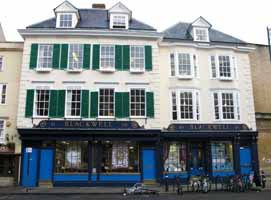
Keri: Some bookstores have such intellectual energy that they make you feel smarter.  Blackwell’s in Oxford is one of them.  You can take your notebook in there and emerge three hours later having done all the research for your latest piece of writing. Blackwell’s has every book you could ever want, at least in the Humanities, and you never know who’ll be sitting beside you in the second-floor café.  There’s a certain jetset element, a Hello magazine blend of Rhodes Scholars and children of foreign potentates.  It makes for glamorous people-watching: you can try to pick out the next Bill Clinton. The main Blackwell’s shop, which opened in 1879, is located in an old house right across the street from the Bodleian, and from the café you can see across the street to the dreaming spires and the Sheldonian theatre. 

I think I grew to love Blackwell’s because it gave me what the Bodleian couldn’t.  Some days I didn’t have the patience for Old Boddy: the books are locked away, can only be called up in small quantities, and you can’t wander in the stacks or take things home, and you certainly can’t drink Diet Coke in there.  All of this leads me back across the street to Blackwell’s. There’s a huge floor in the basement called the Norrington Room (a friend of mine used to call this area the TARDIS, after Dr. Who’s police box).  The store had to excavate beneath Trinity College’s gardens to accommodate it.  The TARDIS holds the philosophy, religion, feminism, film, and cultural studies books.  That’s where I would disappear to read things that weren’t quite approved of by my tutors— French feminism, American cultural studies, and anything else that seemed too jargony or flighty.  And then, if you hike up about five flights of stairs, you get to the second-hand section.  That’s a great place to find out-of-print women’s novels published by Virago in those gorgeous green-backed books—books like Rosamund Lehman’s Dusty Answer, my favorite best-seller of 1927.

Meanwhile, in London: last summer I discovered Samuel French’s Theatre Bookstore.  It caters to an entirely different clientele: the city’s actors.  It’s tucked away on a very quiet corner of Fitzrovia, and the walls are full of notices of auditions and ads for plays.  They carry every thespian thing you could ever want, and then some things you didn’t even know existed.  In that second category, I picked up a script for Mindy Kaling’s spoof of Good Will Hunting called “Matt and Ben.” 

Keri: Please tell me about your favorite bookstores, and what they offer.

Anne: I grew up going to Seattle’s University Bookstore with my family on the weekends. The children’s section and the magazines were on a balcony overlooking the main floor. My father would browse history while my mom, sister, and I picked out books for ourselves. I remember presenting him with a stack of two or three and having him assess my choices, and substitute one book for two others he deemed better. Those were golden hours.

The summer before graduate school, when I was 21, I worked at Bek’s Books in Seattle. It was an ordinary independent bookstore in an underground mall in a bank building: precisely the kind of bookstore I had scorned before the owner, a family friend, offered me a much-needed job. It had New York Times bestsellers near the door, travel books, a romance section, cookbooks, and a small children’s section. It was a place for bank tellers and lawyers to pass through on their lunch break. My snobbery faded pretty quickly. I loved the other clerks there and I grew to love the passionate reading tastes of people who then looked to me very ordinary, very middle-aged. I was working my way through the “recommended reading” from Yale that summer and driving everyone—myself included—crazy by answering customer’s queries about what I was reading with “Oh, The Aeneid.”

Now, I dream daily of Greenwich Village’s Three Lives Books. I feel smarter just going in. That’s a reader’s store: a store to discover great fiction. The staff is wonderful and friendly and though I don’t go nearly as often as I like, they are kind and so knowledgeable and genuinely interested in reading. It’s a lovely little space: just big enough to linger in, but small enough not to be overwhelming. The perfect stop on the way to the PATH train & back home to Jersey. And, of course, in London, I have to go to Hatchard’s, the shop Clarissa browses and still a great browsing store in an old townhouse off Piccadilly (though it’s a chain now).

I wish New York had a good academic bookstore: I miss having a place to browse through the books that I see advertised in The New York Review of Books (on those rare occasions when I get to it). Bluestockings comes close, but I want a broader political range, not only radical books. My husband tells me that NYU has just redone its bookstore and made it into a flagship. I have high hopes for that. I haven’t spent a lot of time in Oxford, but I know just what you mean about the Blackwell’s there: it’s certainly a pilgrimage spot for me. Seminary Books in Chicago is the only American bookstore I know that comes close to giving you that incredible feeling of stretching your brain, making you long to read serious, important books, new and old.

New York’s Drama Bookshop is a space like the one you describe in London. Do you know it? Kris Lundberg of the very Woolfian Shakespeare’s Sister Theater Company did a staged reading there on Woolf’s birthday one year and invited me to speak. They have a small black box performance space in the basement. If you haven’t been, treat yourself!

Keri: When describing Sylvia Beach’s taste in books and her reading practices, I often end up borrowing Virginia Woolf’s idea of the “common reader.”  Making books available to a wide range of people in every walk of life was important to both Woolf and Beach.  And they both liked to make fun of academics who took themselves too seriously (I love Woolf’s academic satires in To the Lighthouse).  Can you say something about Woolf’s fondness for “common reading,” why the concept is so important to her, and also perhaps what role it plays in your own editorial practices, teaching, or reading? 

Anne: The notion of the common reader is really important to me. Woolf writes about reading what one likes and never pretending otherwise. She wasn’t always so confident, but by the time she was in her forties—my age now—she was. Her confidence, her refusal to let others turn her away from Euripides or a Countess’ memoirs, gives me confidence when I feel others challenging my choices.

One of the things I love about blogging is the happy randomness of it, the way it allows you to graze around the web until, suddenly, you hit an unexpected pocket of intensity—some blogging community where everyone is writing fan fiction about Harry Potter or interacting with their favorite romance novelist or enjoining a group of friends to work their way through Don Quixote as I did with Bud Parr a few years back. My friend Lizzie Skurnick (who blogs over at the Old Hag and wrote Shelf Discovery) is my 21st century model for common reading: she can rattle off the plots of great forgotten bestsellers from the 70s and then, in the same paragraph, she’ll tell you about what she’s getting from this rereading of Thackeray.

Although I never read as much as I want to read, reading is the great pleasure in my life and I love peopling my life and my imagination with—well, just everything I can gobble.

When I teach, though, I want to communicate enthusiasm, but I don’t teach a lot of pop. The fun of pop and light fare is discovering it for oneself. I am happy to refer to Lady Gaga in the classroom, but I don’t teach her or Nora Roberts or Eat, Pray Love. My sense is that you want a teacher for those texts that are so intimidating or difficult that you wouldn’t tackle them on your own.

Conversation With Keri Walsh, Part Three: Editing the Modernists

In honor of the publication of her edition of Sylvia Beach’s letters, I wanted to do something special here at Fernham. As part of Sylvia Beach Week, Keri Walsh and I “interviewed” each other over email. We continued the conversation we began at her reading at Bluestockings books in May, touching on the challenges of editing, on women modernists, on bookstores, archives, and common readers. We could barely stop talking, so the conversation is in four parts. I hope that you enjoy reading it as much as we did writing it!

Keri: As I mentioned to you after the Bluestockings reading, I would find the task of editing Mrs. Dalloway intimidating because of the venerable editors who have come before.  Can you say a little bit about your relationship to past editions of the novel, and perhaps tell me about one or two interesting decisions you’ve had to make that depart from decisions made by past editors?  Or can you say something more generally about how these earlier editors appear in your mind as you work—as friends, supporters, rivals, buddies?

Anne: After four years of working on this project (off and on, often in the margins), I have finally reached the stage where my excitement about it is slightly greater than my intimidation. It’s been really hard.

There are three important editions of Mrs. Dalloway that come before me. I was really grateful that the Cambridge general editors made it their policy that we don’t pick fights with prior editions or go out of our way to mention their errors. I don’t know G. Patton Wright at all, but his edition has a really strong sense of the novel’s textual history. That has been a big help. I have a longstanding and friendly email correspondence with Murray Beja and his very funny essay on coming to love textual editing after being skeptical was immensely reassuring to me when I was most bored and intimidated by the tedium of collating editions. He is like a kind uncle to me and I’m deeply grateful for that. David Bradshaw worked off Wright’s edition in preparing a paperback student edition for Oxford. When I finally realized I could just use his historical research as a source in itself, I stopped feeling even the least bit rivalrous. Besides, I know David and like him immensely. He’s editing another of Woolf’s novels for Cambridge and I think it’s a stroke of luck that I get to follow along after him. That is not to say that these three are among the readers whose opinions I most dread.

One of the changes that editors often make regards Elizabeth Dalloway’s dress at the party: it’s referred to three times as pink and once as red. Editors often see that red as a mistake and it’s true that Woolf could be careless at the proof stage. But the person who perceives the dress as red is Sally. Of course, if a dress could flicker between pink and red, Sally Seton would be the one who would see it as red. I’m sticking with it as written, I’ll flag it for the readers, and let them write their own interpretations. I don’t think that’s a mistake.

Keri: When I was working on Beach’s letters, whenever I was in doubt about an editorial decision, I turned to Bonnie Kime Scott’s edition of Rebecca West’s letters.  They were my model.  Do you find inspiration in any particularly exemplary volumes?  What editions of modernist novel do you admire?

Anne: I love Bonnie and she edited Dalloway for Harcourt, but that’s not a model edition for me—it’s too friendly and too close. It’s great for students, but it’s not the work I’m doing here. The edition that I admire most is my friend Jeri Johnson’s Oxford edition of Ulysses. It created all kinds of textual controversies—as such things always do—and that’s not going to be an issue for any book but Ulysses. The inspiration for me is how Jeri is equally interested in chasing down historical and literary allusions and that’s one of my chief aims: to have footnotes about the demolition of Devonshire House (which Clarissa remembers going to parties at and which was torn down between when Woolf submitted the proofs and the novel’s publication date) and footnotes about allusions to the Bible.

The CUP general editors, Jane Goldman and Susan Sellers, have been incredibly generous, sending us all computer files of their notes and apparatus along the way. They are each working on a novel, too (To the Lighthouse and The Waves, respectively) and I’m really lucky that the wonderful Woolf scholar Mark Hussey is doing Between the Acts for CUP, lives in New York, and is a friend. When I get really desperate, I ask him to have lunch with me. He always cheers me up and spurs me on.