One couldn't laugh at him. He looked so ordinary. You might have stood him behind a counter and bought biscuits--poor chap, all rigged up in gold lace. And to be fair, as he went his rounds, first with Clarissa, then with Richard escorting him, he did it very well. He tried to look somebody. It was amusing to watch. Nobody looked at him. They just went on talking, yet it was perfectly plain that they all knew, felt to the marrow of their bones, this majesty passing; this symbol of what they all stood for, English society. Old Lady Bruton, and she looked very fine too, very stalwart in her lace, swam up, and they withdrew into a little room which at once became spied upon, guarded, and a sort of stir and rustle rippled through every one openly: the Prime Minister!--Mrs. Dalloway.
Tuesday, July 12, 2011
Thursday, July 07, 2011
Alfredo Zitarrosa
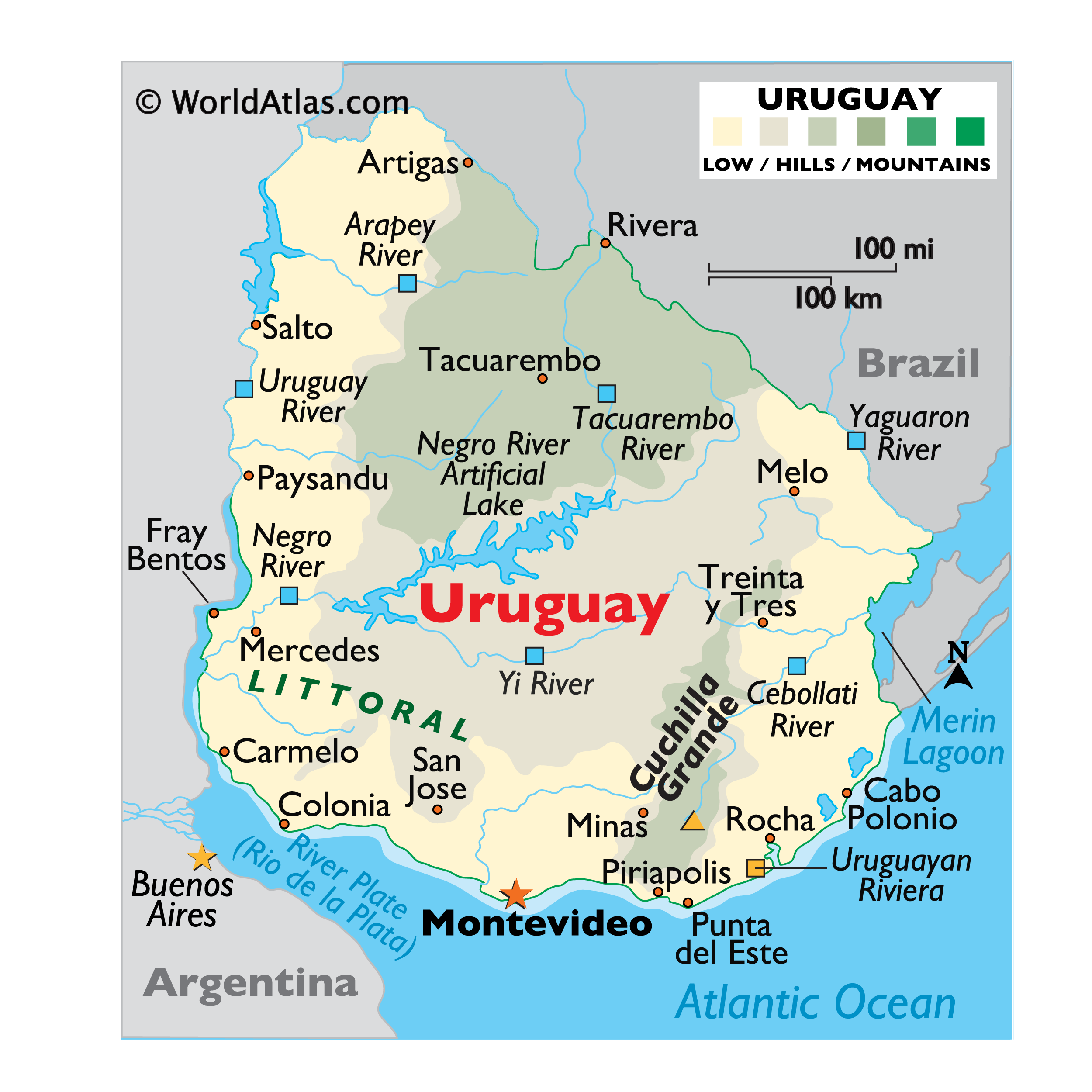
Last week, after the conference was over, two of the English professors from the University of the Republic of Uruguay were kind enough to take me and another visiting American on a drive to the charming vacation town of ColonÃa.
While there, I spotted a music store and asked my new Uruguayan friends to help me pick some Cds to remember Uruguay by. I had read about Luciano Supervielle as the hot new Uruguayan artist on the plane, so I picked up his album. I also got a two-cd compilation of Candombe, the distinctive, highly percussive Afro-Uruguayan music (and, I’m told, the only music that this solely Uruguayan—tango, being, of course, shared with Argentina). Both are terrific.
If you want old music, traditional music, they said, maybe try Alfredo Zitarrosa. But, the man warned, his music is very sad, very depressing. He has one song, my new friend continued, in which he likens his failed love, his failed life, his failed nation, to the slaughter of a calf which is vividly described in the 16-minute song. By the end of the 16 minutes, you’ll want to kill yourself, too, he said. This music may not be for you.
But my fellow American and I took one look at this face—that sad, manly bassett hound topped with a lot of hair and a bit too much gel really does it for me—and picked up copies of a collection of Zitarrosa. I can’t stop listening to it and it seems to me that his is the music I have been needing all my life. Gorgeous, lush, and melancholy, with beautiful clear masculine vocals and a sweet Spanish guitar, the music moves me to my core.
To hear this man singing mi pais, mi dolor, mi gente, mariposa is to feel, all facts to the contrary, almost able to understand Spanish.
I love Dylan and Leonard Cohen, but there is something about melancholy songs in another language that just slays me. My love for Jacques Brel will never abate, but I needed someone new. Zitarrosa forever!
Wednesday, July 06, 2011
The first Mrs. Dalloway
I really can barely stand the Clarissa of The Voyage Out, but this is too funny:
Mrs. Dalloway, with her head a little on one side, did her best to recollect Ambrose—was it a surname?—but failed. She was made slightly uneasy by what she had heard. She knew that scholars married any one—girls they met in farms on reading parties; or little suburban women who said disagreeably, "Of course I know it's my husband you want; not me."
Tuesday, July 05, 2011
A thin thread
“Because,” he said, “I sometimes have a queer feeling with regard to you—especially when you are near me, as now: it is as if I had a string somewhere under my left ribs, tightly and inextricably knotted to a similar string situated in the corresponding quarter of your little frame. And if that boisterous Channel, and two hundred miles or so of land come broad between us, I am afraid that cord of communion will be snapt; and then I’ve a nervous notion I should take to bleeding inwardly. As for you,—you’d forget me.”--Jane Eyre, chapter 23
Spotted whilst watching the wonderful new film of the book on American flight 596 from Buenos Aires to JFK, confirmed via e-text. Compare to:
And they went further and further from her, being attached to her by a thin thread (since they had lunched with her) which would stretch and stretch, get thinner and thinner as they walked across London; as if one's friends were attached to one's body, after lunching with them, by a thin thread, which (as she dozed there) became hazy with the sound of bells, striking the hour or ringing to service, as a single spider's thread is blotted with rain-drops, and, burdened, sags down. So she slept.--Mrs. Dalloway.
You never know when you'll find a footnote.
Monday, July 04, 2011
Coloquio Internacional Montevideana VII: Programa Montevideana VII
Coloquio Internacional Montevideana VII: Programa Montevideana VII: "MIÉRCOLES 22 DE JUNIO 13.30 – 14.30. Inscripciones. 14.30 – 15.10. Palabras inaugurales a cargo de: Enrique Aguerre, Director del Museo ..."
Monday, June 27, 2011
Uruguay
Back from Uruguay this morning. The chivitos were delicious. I was treated like a princess. The Woolfians of the Southern Cone were amazing and I learned so much it will take me days to process, but let us say that Montevideana VII was a wonderful, unforgettable experience. Wow!
Wednesday, June 15, 2011
The 21 Woolf Conferences
How many have you been to? My 14 are in bold:
1. Pace U--NYC (Mark Hussey) 1991
2. Southern Conn State U--New Haven (Vara Neverow) 1992
3. Lincoln U--Jefferson City (Jane Lilienfeld) 1993
4. Bard College--Annandale-on-Hudson, New York (Paul Connolly) 1994
5. Otterbein College--Westerville, OH (Beth Daugherty) 1995
6. Clemson U--Clemson, SC (Wayne Chapman and Elisa Sparks) 1996
7. Plymouth College--Plymouth, NH (Jeanne Dubino) 1997
8. St. Louis U—St. Louis, MO (Georgia Johnston) 1998
9. U of Delaware—Newark, DE (Bonnie Kime Scott and Ann Ardis) 1999
10. U of Maryland-Baltimore—Baltimore MD (Jessica Berman) 2000
11. Bangor U—Bangor, Wales (Michael Whitworth) 2001
12. Sonoma State U--Rohnert Park, CA (J.J. Wilson) 2002
13. Smith College—Northampton, MA (Karen Kukil et alia) 2003
14. U. of London—London, UK (Gina Potts and Lisa Shahriari) 2004
15. Lewis and Clark College—Portland, OR (Rishona Zimring) 2005
16. U of Birmingham—Birmingham, UK (Kathryn Simpson, Steve Ellis et alia) 2006
17. Miami U, Ohio—Miami, OH (Madelyn Detloff and Diana Royer) 2007
18. U of Denver—Denver, CO (Eleanor McNees) 2008
19. Fordham U, Manhattan—NYC (Anne Fernald) 2009
20. Georgetown College—Georgetown, KY (Kristin Czarnecki) 2010
21. And U of Glasgow—Glasgow, Scotland (Jane Goldman) 2011
Thanks to Vara Neverow for posting the list on the Woolf listserv.
I've missed some of the best ones, I'm told, but what I've seen has been pretty awesome, pretty sustaining. I'm sad to have missed Glasgow this year, but I'm looking forward to Saskatoon in 2012!
Tuesday, June 14, 2011
Two of my pieces elsewhere
In case you missed it, my letter to the NYTBR in response to a review of Harold Bloom's new book was published in this Sunday's edition.
And I have a longish blog post on rape, Clarissa, and Dominique Strauss-Kahn over at Guernica.
Please do read them, and if you're moved to comment on the Guernica piece, please do so. I'd love the editors to see that you'd been by, read, and responded...
And I have a longish blog post on rape, Clarissa, and Dominique Strauss-Kahn over at Guernica.
Please do read them, and if you're moved to comment on the Guernica piece, please do so. I'd love the editors to see that you'd been by, read, and responded...
Monday, June 13, 2011
Jay-Z and Cockney Rhyming Slang
Every once in a while, I’ll be teaching and Cockney rhyming slang will come up. Can “apples and pears” really be “stairs”? Do people really say “trouble and strife” to mean “wife”? And frankly, I can’t answer. It has always seemed baffling to me, too.
Then, on my run this morning, I’m listening to Jay-Z’s “Izzo (H.O.V.A.)”
If a man named Shawn Corey Carter can re-style himself as Jay-Z and then reshape that into the grandiose (and pretty terrific) god-term pun Jay-hova, and then turn it into a kind of new pig Latin and get sweet-voiced women to sing “H to the Izzo, V to the Izzay” so we all understand that this is a tribute to the greatness of that same young Shawn Carter’s rap stylings, why shouldn’t Brahms, shortened from Brahms and Lizst, mean “pissed” (as in drunk)?
The link, if you click it, has some really good examples, and, in more patient terms, shows how many such rhyming substitutions are in common use (such as 86'd for nixed).
This makes me feel much better.
Friday, June 10, 2011
New Blog Post
Over at Guernica!
It's my first post there, and it's about rape in 1747 and today, about Clarissa and about Dominique Strauss-Kahn. Please do read it and leave a comment!
Thursday, June 09, 2011
Rio de la Plata, Uruguay
A fantasia on Uruguay from Woolf's great 1925 essay, "The Elizabethan Lumber Room":
“what if the passage to the fabled land of uncounted riches lay only a little farther up the coast? What if the known world was only the prelude to some more splendid panorama? When, after the long voyage, the ships dropped anchor in the great river of the Plate and the men went exploring through the undulating lands, startling grazing herds of deer, seeing the limbs of savages between the trees, they filled their pockets with pebbles that might be emeralds or sand that might be gold; or sometimes, rounding a headland, they saw, far off, a string of savages slowly descending to the beach bearing on their heads and linking their shoulders together with heavy burdens for the Spanish King”
Wednesday, June 01, 2011
Google Coincidence
The other night, I was re-reading Nicholas Carr’s “Is Google Making Us Stupid.” A provocative and funny title for a really thoughtful piece on how our thinking may be changing—really, profoundly changing—with our increasing reliance on computers. I really love that essay for the care with which it weighs the good and the bad of Google. Carr writes: “The Web has been a godsend to me as a writer. Research that once required days in the stacks or periodical rooms of libraries can now be done in minutes.” I feel that profoundly, too. Much as I love the hours and hours that I’ve logged in the stacks and in the reading rooms of great libraries, it’s exciting and a lot easier to find the stuff so fast.
I turned from Carr to Woolf, to reread her essay “The Russian Point of View.” I’m rereading The Common Reader in its entirety for my talk in Uruguay and for the Dalloway edition. As I read, I come upon one of Andrew McNeillie’s footnotes from 1984: “This reference has resisted all efforts at discovery.”
It’s a wonderful footnote and one I’ve long admired. McNeillie is a fabulous editor and, in days before Google, he tracked down dozens and dozens of allusions, translated Greek, and generally showed the seams of Woolf’s work so that scholars like me could trace her sources and hear her allusions. And, this note, to a bland quote from one of Chekhov’s over 100 stories, seems fair: it’s the only time in the whole book when McNeillie just gives up.
So, of course, I typed the phrase “such conversation as this between us would have been unthinkable for our parents” into Google. First hit? “Anton Chekhov, A Doctor’s Visit, trans. Constance Garnett”—of course, the very translation Woolf used. Second hit? Virginia Woolf,
Cool.
Friday, May 27, 2011
Quiet Americans
I took a break from Clarissa last weekend to read my friend Erika Dreifus’s debut collection of short stories, Quiet Americans. It’s a lovely collection of loosely interconnected stories about American Jews and their European roots.
Erika is a historian by training, and you can feel that in the assurance of her voice, her attention to details, the way that every character, every story feels rooted in a precise time and place. The opening story, about a Jewish pediatrician who counted among his patients a child of a top-ranking Nazi is wonderfully tense. The scene in which the doctor is summoned to the Nazi’s office and advised, strongly, to leave Germany is cinematic and haunting. The fact that the doctor heeds the advice, a welcome happy ending.
But all the characters in the book are haunted. Most of these stories are about American Jews with German roots who just barely got out in time (or are the children and grandchildren of those men and women). The survivor’s guilt, the sense of the duty to remember, to protect, to insure that a Holocaust doesn’t happen again, is palpable throughout. These are stories that convey one of the key strains in our culture. For me, they worked best when there is tension within that burden, as in the witty and effervescent last story about a man who becomes obsessed with tracing his own family tree. Less successful, for me, were stories about the 1972 Munich Olympics or the sorry episode of Amiri Baraka’s lost tenure as poet laureate of New Jersey for his nutty, anti-Semitic musings about the root causes of 9/11. Those stories keep alive a grief and a grievance that’s fully justified: I shudder in horror at the thought of those slaughtered athletes and in shame at the way a great poet can fall prey to crackpot ideas. Still, in political fiction, I want more subtlety, an acknowledgment of the real pain that leads people to become violent or even just to believe in conspiracies.
Unqualifiedly wonderful is a story where Erika works a different vein, channeling Isaac Babel or Isaac Bashevis Singer in “Matrilineal Descent,” a moving fable about two sisters in a village in Germany, one plain and hardworking, the other pretty and delicate, and the baker whom they both love.
Best of all, as others have said, is the title story, “Quiet Americans, or How to Be a Good Guest.” There, the duty to witness battles with a character’s natural reserve richly and powerfully. I approached this story, its title so evocative of Louis Begley or Graham Greene, with some trepidation, fearing it would be a paean to “The Greatest Generation.” Instead, the quiet American is “you,” a young grad student born in the 60s or 70s, visiting Germany for the first time. As she listens to a young tour guide noting, again and again, buildings that were destroyed in the war, never mentioning the lives lost, never acknowledging the Holocaust, the young quiet American grows increasingly frustrated with rage. But what to say? How to interrupt the tour? It’s a wonderful dilemma and the solution is just terrific.
It reminded me of a tour I took, years ago, of a stately home outside Charleston. The tour guide said that the family had taken a “hiatus” to England during the years 1862-1866. Why, asked my friend, also a historian, did the family choose to leave the South during just those years exactly? Hmmm?
In any case, I can highly recommend Erika’s collection. Each story is a gem on its own and, together, they paint a portrait of the enduring European roots of many American Jews, both of the Holocaust and of the culture that the Holocaust tried, but failed, to fully destroy. They are also beautifully written, crafted with care, with a sure voice that has many registers. A great debut.
Thursday, May 26, 2011
Leslie Stephen, Catskills Comic
Last week, I read (Woolf’s father) Leslie Stephen’s essay on Clarissa as part of my ongoing quest to figure out the relationship between Richardson’s novel and Woolf’s. I found some wonderful stuff, including Stephen’s surprising (to me) wit. In fact, if you were to look over my reading notes, you might mistake them for some weird brand of literary stand-up. I give you some of my favorites:
On Richardson’s moralizing
“indefinite twaddle of a superior kind” (83)
More on Richardson’s moralizing
“he has succeeded in thoroughly forcing upon our minds, by incessant hammering, the impression which he desire to produce” (116)
On a priggish male character
“He is one of those solemn beings who can’t shave themselves without implicitly asserting a great moral principle” (103)
On Richardson’s gift with women characters
“Richardson’s sympathy with women gives a remarkable power to his work. Nothing is more rare than to find a great novelist who can satisfactorily describe the opposite sex” (82)
[pause. Wait for it.]
“Unluckily, his conspicuous faults result from the same cause. His moral prosings savour of the endless gossip over a dish of chocolate in which his heroines delight” (83)
On Pamela
“distinctly the words of his works—of which it is enough to say at present that it succeeds in being neither moral nor in amusing” (86)
On the thoroughness of his novels
“We get the same sort of elaborate familiarity with every aspect of affairs that we should receive from reading a blue-book full of some prolix diplomatic correspondence” (91)
And, the best one: On reading Clarissa
“readers…may find the prolixity less intolerable than might be expected” (94)
Wednesday, May 25, 2011
Sweetheart, I feel the same about you…
“I do not know that I am happiest when alone; but this I am sure of, what I am never long in the society of her I love without a yearning for the company of my lamp and my utterly confused and tumbled-over library.”—Lord Byron, from More’s Life, quoted in Leslie Stephen’s Hours in a Library
If, like me, you love quotations about books and libraries, you’ll find a treasure trove in Stephen’s ten-page album of quotations, which opens his collection of literary essays.
Tuesday, May 24, 2011
The Incomparable Max (Beerbohm) on the BL
Searching for a quote on tweeds, I re-read the wonderful “Enoch Soames” (1919) last week. It’s still a great story. Here’s a taste of the dialogue:
--The reading room?
--Of the British Museum. I go there every day.
--You do? I’ve only been there once. I’m afraid I found it rather a depressing place. It—it seemed to sap one’s vitality.
--It does. That’s why I go there.
Wednesday, April 27, 2011
Five
My youngest turned five today. It makes me sentimental and sad. For her part, she opened everything, very businesslike, with a shrug and a "that's nice" or a thank you or, sweetest of all, turning to her sister, we can share this!
Then, when they were all opened, she let loose a LOUD scream--an Arrrmphh-- jumped Really High five times, coming down Hard and said, loudly "Best Birthday Ever!"
Thursday, April 14, 2011
Waiting for the Bus
This quotation from feminist geographer Doreen Massey haunts me:
Much of life for most people, even at the heart of the first world, still consists of waiting in a bus-shelter with your shopping for a bus that never comes.
Wednesday, April 06, 2011
The Myth of Progress
A month ago, Guernica linked to a blog post from Amy Davidson at The New Yorker. Meditating on the death of nine little boys in Afghanistan, out gathering firewood, she asked us to pause, once again, over this war. “Do we know the costs, or even understand our own losses?” she asks. Reflecting on the testimony of the surviving witness, she offers an aside: “Hemad is eleven years old. (So, as it happens, is my own child.)”
That aside touched me deeply. When terrible things happen to someone who is just my age or just my child’s age, we feel them more keenly. We can imagine more vividly how great the loss because we are intimately involved in what it is to be eleven or the mother of someone who is.
I thought about how little I’ve done to work for peace in the past year. At other times, I’ve really tried to do my part, but it’s been a long time since I have even blogged about peace, let alone tried to contact congress. I’m deleting emails from progressive groups unread and I’ve barely signed a petition in 2011. So, for the past month, I’ve been wondering what I can do to work for peace.
And I’ve been feeling pretty discouraged about the prospects.
Then, today, I listened to my 8 year old give me the plot summary of the Kit: An American Girl (1934) book from the library, explaining the Great Depression to me and I thought about how much easier it was to imagine having parents who took in boarders in 2011 than it might have been in 2008. I thought about the wars and listened to an interview with a Tunisian activist. I read about the stagnating violence in Libya and the vortex of violence in the Ivory Coast. I saw headlines about tax season and retirement and worried about my daughters’ future. After all this, I heard myself whine to myself, “I thought everything was going to get better, but it’s not better. It’s worse.”
Shame on me. All those moments in class when I mock the modernists for how shattered they were when their world didn’t get better, when war turned out to be ugly and ignoble, when bringing women into the workplace proved complicated. Suddenly, I feel so like them. Middle-aged, worried about the future of my children and my students, nostalgic for past times that were really not that good, but are now colored by the knowledge that the gas crisis would abate, the Iran hostages would be released, the Berlin Wall would come down…
The Myth of Progress dies hard. I have yet to kill it.
I need to find new ways to work for peace--and, the Bob Marley fan in me rushes to add--and justice.
Tuesday, April 05, 2011
Barges
I’ve got a pretty sweet Pandora station to listen to when I need to work but don’t want to. It’s based on Iron & Wine and it plays all kinds of gentle folk rock by soulful kids living in Brooklyn—a little Coldplay, lots of Sufjan Stevens, some Neko Case, moments of Phillip Glass, Penguin Cafe Orchestra. But I had an intense reaction of fascinated loathing when The Vision of a Dying World’s “Barges” came on.
Out of my tent flap, glowing in the night
You can see the leaders' cigarette light
Silently flows the whiskey from its flask
As the leaders do go for a blast
Leaders, I would like to go with you
I would like to share your whiskey too
Leaders, are there boy scouts in your bed?
Are you prepared for the night ahead?
Find more artists like The Vision of a Dying World at Myspace Music
We used to sing “Barges” at Camp Sealth, a Camp Fire Girls camp on Vashon Island (and less often at the Y-owned Camp Orkila) and I always found it creepy. First of all, of all the sea-going vessels that passed through Puget Sound, or any waterway, barges hold the least romance for me—and have the ugliest name. Singing “Barges, I would like to go with you / I would like to sail the ocean blue” always seemed sorry to me. I dreamed of ships, of islands, of adventures, but they never involved a barge.
Then, too, at sleepaway camp, I worked hard to guard myself against group sentiment. I was homesick at night and I knew that the counselors preyed on that generic feeling to build esprit de corps. Dreamy and bookish, I resisted anything that smacked of manufactured sentiment.
My feelings about the song are really strong. If you asked me when I was ten, I would have told you that it was really stupid, but something in it moved me deeply and I resented being moved. I still do.
Turns out that this is an old camp song and feeling about it run high from those who were campers in the 50s and 60s. (I would have been at Sealth in the mid-late 70s), as this discussion board attests. Many of those campers were burdened with the dubious origin story that it was written by a crippled, dying child who longed for escape from her hospital room. If that is not enough to secure a permanent contempt for the song and the custom of terrifying little girls away from home for a week, I don’t know what is. I was delighted to learn, decades too late, that it spawned some delicious parodies. Here is one:
Out of my tent flap, glowing in the night
You can see the leaders' cigarette light
Silently flows the whiskey from its flask
As the leaders do go for a blast
Leaders, I would like to go with you
I would like to share your whiskey too
Leaders, are there boy scouts in your bed?
Are you prepared for the night ahead?
That's one I'll remember to teach my kids should the occasion arise.
Subscribe to:
Posts (Atom)