Thursday, July 22, 2010

Conversation with Keri Walsh, Part Two: Beach & Joyce & Paris & Woolf

In honor of the publication of her edition of Sylvia Beach’s letters, I wanted to do something special here at Fernham. As part of Sylvia Beach Week, Keri Walsh and I “interviewed” each other over email. We continued the conversation we began at her reading at Bluestockings books in May, touching on the challenges of editing, on women modernists, on bookstores, archives, and common readers. We could barely stop talking, so the conversation is in four parts. I hope that you enjoy reading it as much as we did writing it!

Anne: You’ve said that Beach’s willingness to work with and for Joyce (a notoriously difficult character) is the central mystery to her life.  I find myself hoping that you’re secretly at work on the script for that drama.  Are you?  More immediately, you must have some hypotheses to the mystery.  Can you share any of them here?

Keri: Beach shared Joyce’s love for language, and she took pleasure in playing around with words.  Her earliest letters show her punning with advertisements, just as Joyce would do in the Aeolus section of Ulysses.  And they both liked to kid around with Shakespeare.  Ulysses includes some funny burlesques of Hamlet, and Stephen Dedalus is a bit of a comic Hamlet.  The first thing that bonded them when they met at a Paris party was Joyce’s amusement at the name of her bookstore, Shakespeare and Company.  He took out a pen to write down the name of the shop, and he came by to visit the next day. 

In addition to their shared comic sensibility and her tremendous admiration for his writing, Beach did understand that there were professional advantages in being associated with Joyce: “Ulysses is going to make my place famous,” she predicted in a letter, and it did.  The daily presence of Joyce at Shakespeare and Company created an aura around the shop, and that aura drew other writers and creative people.  His faith in Beach consolidated her status as a taste-maker and champion of the avant-garde. 

So there were some idealistic and some practical reasons why Beach went out of her way for Joyce: her earnest desire to help an artist she believed in, one who was having difficulty getting his work to print, and the status he conferred on her business.  But ultimately, it’s still difficult to explain just why she handed over her life to Joyce for ten years, putting herself in constant financial risk and exacerbating her migraines with all the demands attendant upon publishing Ulysses: the huge, constantly-changing manuscript; the fact that to fund the book she needed to get subscribers in advance; the lack of copyright protection in England and America which meant that she also had to fight against the piracy of the book; Joyce’s poor health; the needs of his family.  She never put herself on the line for any other writer in this way.  Many biographers and memoirists have mentioned Joyce’s personal charisma—his manner of speaking, his beautiful eyes, his good manners and his slightly antique formality (they always called each other “Mr. Joyce” and “Miss Beach”) and the reputation that preceded him as the author of Dubliners and Portrait—and so maybe, at a certain point, we have to appeal to that “Joyce Effect.”  Sylvia Beach wasn’t the only person to go out of her way for him.  He inspired loyalty and love, in spite of his many trying qualities. 

Anne: I know that in high school I grew enamored of Paris in the 1920s because it seemed to offer all kinds of things that Seattle in the 1980s could not.  We read Hemingway and Fitzgerald in high school, and, through them, I learned for the first time about this idea of a literary circle, a literary city.  What drew you to this place and time?
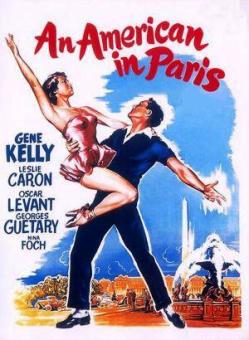
Keri: How funny, because Seattle was about to explode as a creative capital in its own right, with a musical scene that could rival 1920s Paris. It just goes to show that Paris has no special privilege in the arts, but it does have a lot of creative history accumulated over the centuries, so it’s easy to see why it’s still magnetic.  I grew up in the city that Leonard Cohen (with his usual hint of irony, I’m sure), called “the Paris of the Prairies.”  But there’s something to his assessment.  After all, Joni Mitchell got her start in Saskatoon.  I spent most of my childhood in a dance studio, and I especially loved tap and musical theatre.  So it was imitating Josephine Baker and Fred Astaire that pulled me into the ex-pat period of the 20s.  I remember once shocking my dance teacher, when I was about fourteen and we were rehearsing a can-can, and kicking our legs madly in the air from all angles, by announcing that originally the can-can was done in Paris without underwear.  I fell for Paris through MGM musicals, especially Gigi and An American in Paris.  I loved the blend of romantic idealism and world-weariness in Gene Kelly’s character Gerry Mulligan in An American in Paris.  He was an ex-G.I., and the film was set after the Second World War, in a new wave of ex-pats.  Richard Wright was in Paris then, soaking up Sartre, and Julia Child was studying at the Cordon Bleu.  Here’s the slightly mixed-up answer Gerry Mulligan gave about why he came to Paris, and it works for me too:

“…for a painter, the Mecca of the world for study, for inspiration, and for living is here on this star called Paris. Just look at it. No wonder so many artists have come here and called it home. Brother, if you can't paint in Paris, you'd better give up and marry the boss's daughter. Back home everyone said I didn't have any talent. They might be saying the same thing over here, but it sounds better in French.”

Keri:  I read Mrs. Dalloway for the first time when I was 23.  It was recommended to me by the friend who was my own Sally Seton, who in those days was exactly the kind of person who would pawn a brooch to come and see you.  I discovered the book through her eyes, and I wasn’t the least bit interested in Richard Dalloway or Peter Walsh: to me, it was Sally and Clarissa’s book.  Do you remember your first reading of the novel, and what it meant to you? 

Anne: It’s funny, I don’t remember my first reading of the novel at all, though Woolf had a profound effect on me from the moment I first read her. At my women’s college, all the English professors were allergic to Woolf, having overdosed on her in the 1970s, so I arrived at graduate school barely knowing who she was. I took Harriet Chessman’s seminar on Woolf and Stein and fell in love with the first word.

This was awkward for a couple reasons. Harriet admired French feminism, which, for all my continuing love of Harriet, is an intellectual taste I cannot acquire. In her class and in that atmosphere—a kind of rogue feminist space amidst the overwhelming phallic patriarchy of Yale—meant that Stein kept winning the day. She had paired Woolf and Stein week by week and each time I would prefer Woolf only to go to class and find that the coolest grad students found Stein more theoretically rigorous: a better lesbian—an admitted lesbian, a richer experimenter, expressing a deeper sexuality. I marked myself as a hopelessly bourgeois girl in continually plumping for Woolf. But there it was. You cannot choose your loves.

I was one of five grad students who declared they were going to write their dissertations on Woolf. Two of the women dropped out of grad school altogether; the two men included chapters on Woolf in their longer projects; I am the only one who wrote on Woolf alone. I just held on the longest. I was stubborn.

But I fell in love with Woolf for words and phrases not for story, so what moved me were the words—the match in the crocus, the green dress in a square, the fire as burns only once in a lifetime—I was greedy for little nuggets of intensity and Woolf fed me.

I started a Happy Hour at a local bar in New Haven that same year. It was unheard of, in that competitive and hierarchical atmosphere, to suggest a gathering without purpose. I just wanted to make friends. Someone said to me “you really are a Mrs. Dalloway, aren’t you?” I still have mixed feelings about that judgment.

Conversation with Keri Walsh, Part One: Who Was Sylvia Beach and How Did you Find Her?

In honor of the publication of her edition of Sylvia Beach’s letters, I wanted to do something special here at Fernham. As part of Sylvia Beach Week, Keri Walsh and I “interviewed” each other over email. We continued the conversation we began at her reading at Bluestockings books in May, touching on the challenges of editing, on women modernists, on bookstores, archives, and common readers. We could barely stop talking, so the conversation is in four parts. I hope that you enjoy reading it as much as we did writing it!
Anne: For people who don’t know her, tell me a little about Sylvia Beach.  And for all of us, what draws you to her story?

Keri: In introducing Sylvia Beach, I’ll start by naming the two achievements that made her proudest: “publishing Ulysses, and steering a little bookshop for 22 years between the wars.”  Her bookshop was Shakespeare and Company, and it would become legendary as the spiritual homeroom of expatriate Paris.  Writers like Ernest Hemingway, F. Scott Fitzgerald, H.D., and James Joyce wiled away the hours there and Beach provided them with books, a mailing address, places to live, introductions, French tutors, advice on publishing, and anything else they might need in Paris.   With the help of the French printer Darantière and a committed bunch of typists, she brought out Ulysses in 1922 when it was banned in England and America. 

Beach was born in 1887 and she grew up in Princeton, New Jersey where her father was minister at the local Presbyterian church.  She was taken to France as a child and she adored it.  She returned during the First World War and spent time doing agricultural work near Tours, and then working for the American Red Cross forces in Belgrade.  When she returned to Paris at the war’s end, she fell in love with Adrienne Monnier, the owner of a French-language bookstore called La Maison des Amies des Livres.  It would become an inspiration for Sylvia’s own shop.  With Monnier’s help and a gift of $3000 from her mother, she opened Shakespeare and Company in 1919.  Little did she know that American writers would soon start flocking to Paris to take advantage of the exchange rate and the reprieve from Prohibition at home.  She was the right person in the right place at the right time, and for any American writer abroad, her bookstore felt like home.  Beach is described affectionately in so many memoirs—most famously, in Hemingway’s A Moveable Feast.   Hemingway was moved by the trust she showed him on his first visit:  he couldn’t pay the lending library fee, but Beach let him walk off with a bunch of books and a promise that he’d come back to pay the bill someday.  In a time before English books were readily available in Paris, he and his wife Hadley were so excited by the prospect of all the reading they could do thanks to Shakespeare and Company.  Hemingway describes coming home to Hadley with the good news, telling her, “we’re going to have all the books in the world to read and when we go on trips we can take them.”  Hadley was delighted and amazed by Beach’s unusual business practices:
“Would that be honest?”
“Sure.”
“Does she have Henry James too?”
“Sure.”
“My,” she said, “We’re lucky that you found the place.”  (38)

Anne: How did you come to discover her letters?  And how did you come to see that they could be a book?

Keri: Maria DiBattista, one of my professors at Princeton, was the first to show me what a rich deposit of Sylvia Beach’s letters and belongings we were lucky to have at Firestone library.   While I was reading Ulysses in Maria’s class, she asked me to come with her to give a presentation on Sylvia Beach to a group called The Friends of the Princeton University Library.  She asked me to pick out one of Beach’s letters to present to the group, and I chose one that is still among my favorites— a letter that Beach wrote to Adrienne Monnier in 1940.  It was written in French, and it provided a lovely sketch of her relationship with her customers in the bookshop, and then a list of some of her latest recommendations. 

Then, again through Maria’s mentorship, I helped to curate an exhibition at the Princeton University Library.  It was called “Portraits of the Lost Generation,” and it featured Man Ray’s photographs and other Surrealist materials mostly drawn from the Sylvia Beach Papers

I loved all the time I spent in Sylvia Beach’s company.  Her letters were significant for modernist literary history, to be sure, but they were also so charming in their own right.  And they told the story one American woman’s life in Europe in the first half of the twentieth century.  In all my reading about women’s role in the First World War, I had never read such a detailed first-person account of what it was like to work in Serbia with the Red Cross.  And it was even more fascinating to learn that though she was expected to get married and live a conventional life, Beach was wearing pants and swooning over women.  With a sense of humor and a kind heart and a romantic spirit, she had managed to carve out a life that worked for her in Paris, to live in accordance with her own desires while also serving others. 

I couldn’t help but marvel over the fact that her letters had never been published.  Many scholars had looked through the collection while writing biographies of Hemingway, Joyce, Fitzgerald, Stein, H.D., but the only person who had made thorough use of the archive with an interest in Sylvia Beach herself was Noel Riley Fitch, Beach’s biographer (Sylvia Beach and the Lost Generation, Norton).  It was really my enjoyment of Beach’s letters that made me think they would be a good book.  I thought that others might like to spend time with her too.


Anne: I have an obsession with the particularities of working in archives: it’s, for me, tedious work, always punctuated by elation and discovery.  I love and hate all the rules and the various ways in which each archive has a distinct personality.  Do you have any favorite anecdotes from your work in the Beach archive?

Keri: Archivists and researchers have curious, often endearing relationships.  Ideally, they both love the archive and feel protective towards it.  Your question calls to mind two very different archival experiences I’ve had, one with a well-known resource, another with a found treasure.

For my Sylvia Beach project I was lucky to work with amazing research librarians at Princeton.  They knew the archive better than anyone, certainly better than I did.  I depended on them daily, and learned how to accommodate myself to the rhythms of the archive.  You can’t just barge in ten minutes before the library closes and ask for a bunch of manuscripts.  You need to build goodwill.  There’s a Jane Goodall effect: if you are simply physically present in an archive long enough, and follow its regulations, you end up becoming a familiar and trusted presence.  That’s when you get to go backstage and bend the rules a bit.  This process works best when you get to inhabit a particular archive over a long period of time.  I was fortunately able to work on Sylvia Beach’s letters during my time as a graduate student at Princeton, meaning I had daily access to her papers over the course of four years.  I spent many summer days hanging out in the Rare Books and Special Collections room, often bringing along research assistants or friends I had roped into helping me. 

Since the Sylvia Beach project, I’ve been working mainly in theatre archives, and that’s even more exciting because they are so much less well-trodden than literary archives: there’s more potential for making big discoveries: you don’t have to satisfy yourself with finding an overlooked comma – it’s more like an overlooked box of letters. At the New York Public Library’s Billy Rose Theatre Collection, I was able to look at programs, scripts, photographs, and notes from a 1946 Broadway production of Antigone that wasn’t even catalogued by the library or listed in the Finding Aid.  No one had seen this material since 1946, and bibliographically speaking, it didn’t exist.  To get access to those papers took a lot of coaxing, some cajoling, and some begging. But the high of making contact with that archive, and discovering the missing pieces of a story I was trying to tell, were well worth it. 

Wednesday, July 21, 2010

Sylvia Beach Week: Adrienne Monnier (1892-1955)


All week, we’re celebrating Sylvia Beach. Please drop by for a new post—or two--on Beach every day. And then head to your local independent bookstore and buy a copy of The Letters of Sylvia Beach.
Keri Walsh wrote this post to explain a little more about Beach’s partner—in life and business—Adrienne Monnier.

I saw in front of me a girl with a round, rosy face, with blue eyes, with blond hair, who, it appeared all at once, had just entered the service of literature as others decide to enter the service of religion….Already her voice was authoritative and charming, very watched over, very limpid, at once full of music and assurance.
-Jules Romains on Adrienne Monnier
Sylvia Beach said that she had three loves: Shakespeare and Company, James Joyce, and Adrienne Monnier.  Of this trilogy, it’s Adrienne Monnier we tend to hear least about, but Monnier was the most influential person in Beach’s life.  Though she was half a decade younger than Beach, Monnier taught her how to run a bookstore, how to deal with French bureaucracy, how to manage cantankerous people: Beach never made an important decision without first consulting her, relying heavily on Monnier’s good judgment and canny grasp of human psychology.  Monnier and Beach met in Paris as Monnier was still grieving her first love, Suzanne Bonnierre. Beach had just returned from her war work with the Red Cross in Serbia, and their romance blossomed slowly into a shared life of books, friends, theatre, writing, publishing, and travel. Monnier’s parents came to see Beach as a kind of adopted daughter, and Beach was there for Monnier in later years when she suffered from the physical and psychological disturbances caused by Menière’s disease.  Despairing of her health’s return, Monnier overdosed on sleeping pills in 1955.  Beach wrote to Hemingway: “I have lost Adrienne-- it’s very sad here without her.”
Image: Sylvia Beach Papers, Manuscripts Division, Department of Rare Books and Special Collections, Princeton University Library. 
Adrienne Monnier wrote personal essays on a range of subjects from Beowulf to André Breton.  When reading her work I’m always struck by how well she knew herself, what confidence she had in her taste, the subtlety, wit, and depth of her remarks.  Though she was a reader of the most difficult and esoteric works, she was also free from snobbery, ranking Josephine Baker or a virtuoso trapeze artist alongside Shakespeare.  There’s a playfulness and shape to the argumentation of her essays that recalls Virginia Woolf’s A Room of One’s Own: Monnier charts the movement of her thought, considering and reconsidering points, airing objections and then meeting them.  She also has a sly wit, a sort of parody of the dry reviewer, when she talks about her “duty” to see the nude women in all of Paris’s different cabarets.  Her sensibility is eminently unpuritanical, always seeking aesthetic pleasure, revealing herself as a connoisseur, but never shying away from ethical or political concerns.
When attending the circus she immerses herself utterly in the performance, and then searches for the language that will allow her readers to feel something like what she felt in the crowd.  She calls it “the most vital of all spectacles,” and she remembers that it was Cocteau who first got the literary world lining up for tickets around the year 1922.  Assessing the circus, she asks: “And what is so noble as the hand of the gymnast, who stands up absolutely straight after his stunt, with his palm open like the very symbol of work and its fulfillment?” But she was sensitive to the emotional complications of such extreme vitality, writing also of the “tragic side of the circus,” its tawdriness, the hard lives of its performers, the risk of injury and death.  She sees the circus as a way of managing human pain, especially for hard-working people: “there they can see suffering, rather than suffer.”
My favorite of Monnier’s essays is the one on Maurice Chevalier.  Well aware that in writing about France’s most prominent music-hall star she is approaching what some might see as a guilty pleasure, she builds up to the confession of her infatuation slowly.  She remembers writing in a letter to a friend, “I tenderly love X, Y, Z, and even Chevalier.”  “Even Chevalier?”  she questions herself, and stages the voice of dissent: “Obviously, I understand very well what Chevalier can be reproached for,” she says, and cops to his various flirtations with the audience.  She admits he has a gimmick: “His great idea is to have English chic.” But then she builds a case for his particular charms: “He comes onstage like a conceited seahorse…He worked damned hard.  He was excellent.  He was the gawky kid of the suburbs who goes around with the gamines, and for whom a number of mature women in small businesses are ready to grant big favors.”   I’m still not sure if this is identification or desire.  Whether she’s describing Peggy Ashcroft (“she has a way of laughing that makes you shiver”) or Brando (“it is Shakespeare who yields to the actor and abandons his Antony to him”), all of Monnier’s writings about performance bristle with this erotic energy, this sense that in the audience sits a critic composed equally of body, heart, and mind.—Keri Walsh

Tuesday, July 20, 2010

Sylvia Beach to F. Scott Fitzgerald, June 23, 1928


All week, we’re celebrating Sylvia Beach. Please drop by for a new post—or two--on Beach every day. And then head to your local independent bookstore and buy a copy of The Letters of Sylvia Beach.

Letter #97
Dear Scott Fitzgerald,
Don’t forget that you and Mrs Fitzgerald are coming to dine with us next Wednesday at 8, (to meet Mr and Mrs Joyce) and we are counting on you. Adrienne and I live at 18 re de l’Odéon on the 4th floor no lift.
Yours very sincerely,
Sylvia Beach

The Letters of Sylvia Beach

All week, we’re celebrating Sylvia Beach. Please drop by for a new post—or two--on Beach every day. And then head to your local independent bookstore and buy a copy of The Letters of Sylvia Beach.

Sylvia Beach might have been a James heroine. She might have been, except that she had the gumption to make a life for herself rather than wallow in an early and ill-considered error.

I’ll admit to finding the opening letters in this edition slow going. It was hard to get my mind accustomed to the rhythms of Sylvia Beach’s mind. They are the ordinary letters of a confident, happy, privileged young woman. Beach’s family was upper-middle class. Her father was a Presbyterian minister in Princeton, New Jersey. The privilege comes not so much out of money—in fact, though she traveled extensively and seems not to suffer from want, many, many letters express the same kinds of small worries and gratitudes about relatively small sums that will be familiar to anyone who has enough—thank you for the $5 for Christmas; can I possibly borrow $1,000 to start my bookstore?

In the early letters, before the U.S. entered WWI, Beach seems to be constantly making elaborate plans for sending gifts of lace and books, giving effusive thanks for receiving pens and nightgowns.

Even when the war begins and the U.S. enters it and Beach goes to Serbia to volunteer with the Red Cross, there remains a spirit of a schoolgirl on holiday. When she plays with words, giving fake Slavic endings to words, it struck a wrong note to my ear: too silly, too goofy, too much of an in-joke of a family.

But, then, too, you hear the intelligence of a woman who could get Joyce’s multilingual play, the joy in being smart. And she writes explicitly about her frustration with the men who mismanage the Red Cross and her own lack of power as a woman volunteer.

Then, the war ends, she decides to stay in Paris, open a bookstore, and falls in love with Adrienne Monnier and, in the course of a couple pages, she is Sylvia Beach: a professional woman, confident and sure of her life.

Mary Wollstonecraft wrote extensively about how the lack of a profession infantilizes women. Sylvia Beach’s letters demonstrate the blossoming of a girl (born in 1887, she was already 30 when writing those girlish letters in 1917) into a powerful, funny woman, negotiating royalties, worrying about James Joyce’s eyesight, and asking permission to bring someone around to meet Gertrude Stein.

Monday, July 19, 2010

Sylvia Beach and Me

In honor of the publication of Keri Walsh’s edition of Sylvia Beach’s letters, I wanted to do something special here at Fernham: all week, we’re celebrating Sylvia Beach. Please drop by for a new post—or two--on Beach every day. And then head to your local independent bookstore and buy a copy of The Letters of Sylvia Beach.

I wanted to be a writer since I could hold a pencil. I started taking French lessons—an hour a week—at age seven. Though I never practiced my French outside that hour of singing “Ainsi font, font, font,” I was avid for it.

That combination meant that it wasn’t long before Paris in the 20s found me. Before I’d finished high school, I’d read A Moveable Feast and Noel Riley Fitch’s Sylvia Beach and the Lost Generation. Paris in the 20s still has its allure and, if I spend most of my intellectual time imagining Bloomsbury and London in the 20s, Paris has lost none of its glow in the intervening decades.

Fitch wrote a lovely, generous foreword to Keri Walsh’s new book. It moves me to think that she, too, still finds so much that’s so special in Sylvia Beach, this American woman who opened a bookstore.

Sylvia Beach Week!


In honor of the publication of Keri Walsh’s edition of Sylvia Beach’s letters, I wanted to do something special here at Fernham: all week, we’re celebrating Sylvia Beach. Please drop by for a new post—or two--on Beach every day. And then head to your local independent bookstore and buy a copy of The Letters of Sylvia Beach.

Beach was the founding owner of Shakespeare and Company, the English-language bookstore in Paris. The bookstore doubled as a lending library, post office, youth hostel, and salon for Americans in Paris and all others who had an interest in modernism. Shortly after opening the store, Beach befriended James Joyce and, when he could not find a publisher, she published Ulysses. Beach is the most important modernist who was not a writer.


Wednesday, July 14, 2010

All Paris, all the time

“Marie had had it with the City of Lights. The fucking Eiffel Tower. Overpriced baguette sandwiches. Benoît Doniel.”—Marcy Dermansky, Bad Marie

Happy Bastille Day.


It’s a Paris summer here at Fernham. I sit in this hot little rented house, staring out at the hazy St. Lawrence River, thinking and reading about Paris.

In Bad Marie, Marie runs off to Paris, which plays a comic version of the role it plays for James and so many others. At one point, Marie thinks “Everyone was always speaking French. Marie found it maddening.” Later, in a yet darker mood, “The city was impressively landscaped, if nothing else.” At a café, Marie thinks “The beer was cold, good, better than any other beer she had ever drunk before….Caitlin was also happy with her milk, which supposedly was also better. Europe was supposedly a superior continent in so many ways.”

This book was all the funnier coming on the heels of The Ambassadors, where Jamesian versions of these thoughts abound on the lips of the visitors from Woollett.

It’s strange, then, that James asserts in the preface that “Another surrounding scene would have done as well.” And this is the very question that Erika Dreifus takes up in her essay on The Ambassadors, which she was kind enough to send me. There (in The Henry James Review, 25 (2004): 44-51), she writes about setting and the centrality of Paris to the novel from the perspective of a historian, teacher, and fiction writer. 

Another scene would not, could not, do as well—for Marie’s getaway, for Strether’s awakening, for James Baldwin or Richard Wright or F. Scott Fitzgerald or James Joyce or Gertrude Stein.

Or Sylvia Beach.

Which brings me to remind you that I’ll be giving over Fernham for a full week to Sylvia Beach, the proprietor of Shakespeare & Co. and the first publisher of Ulysses. This is in honor of Keri Walsh’s brand new edition of Beach’s letters.

I looked around to see if others were reading and blogging about The Ambassadors and I found two more things of note:

A blogger called Bruce Oksol has a lovely post of his first impressions, including these:
7. Henry James writing style is perfect for learning to diagram sentences (which I doubt anyone does any more). His sentences are very, very long. Likewise, his passages are very long. James can take two pages to say that two people look alike.
8. I have found at least one occasion in which James uses a word that doesn't exist in the English language, but looks like it should. In context, one can almost figure out what James was saying but who knows for sure. 
 and this:
I am 58 years old. The protagonist in The Ambassadors is 55 years old. He and I are asking the same questions.

And The Millions informs me that Cynthia Ozick’s forthcoming novel, Foreign Bodies is a retelling of The Ambassadors. The Times describes it this way:
Cynthia Ozick will return to the subject of families in need of reconciliation in a new novel called “Foreign Bodies.” On Wednesday, Houghton Mifflin Harcourt said it had acquired the book and planned to release it in winter 2011. In a statement, the publisher said the new work, set in postwar New York, Paris and California, “is the story of a divorced schoolteacher who tries to resolve her brother’s family dramas, leading to extraordinary and wholly unanticipated results.”
That seems better than the nonsensical publisher’s blurb that “the plot is the same, [but] the meaning is reversed.”

How can you “reverse” the meaning of a James novel? As E. M. Forster wrote, “it is Paris that gleams at the center…--Paris—nothing so crude as good or evil” (via Erika’s article). What is the opposite of Paris?

Don’t answer that. I think I’ve lived there, too.


Bad Marie in the Times

A lovely article and an adorable picture of Marcy and her daughter Nina in the New York Times today!

Tuesday, July 13, 2010

Bad Marie


A few years ago, I met Marcy Dermansky at Housing Works and she gave me Cate Blanchett’s copy of her novel Twins.

That is, Marcy had been on her way to a screening and had thought that, perhaps, if she got near enough to Cate Blanchett, she would give her a copy of her book. But, she didn’t get near enough and she met me instead. So my unprepossessing paperback copy bears the distinction of have been intended, albeit somewhat haphazardly, for a movie star. We have since become friends, trading stories of our daughters and going swimming on facebook, so it didn’t take much begging to get her to send along an advance copy of Bad Marie.

There are movie stars in Bad Marie, too. And, like Twins, this is an utterly delightful gobble of a book. I am not a fast reader, but I did gulp this up in a day.

It’s a wonderfully silly book—you have to just go with its utterly improbably donnée: that Marie fell in love with a French novel about sea lions in prison, that her girlhood rival has married the novelist, and that, upon her release from prison, Marie insinuates herself into their lives as the babysitter. Once you’ve gone that far, then following Marie as she hops onto a jet to Paris with the husband and toddler in tow is nothing—and such great fun. I am all in favor of farce, and this book delivers. There is something very La Cage Aux Folles about the whole thing: like one of those crazy French bedroom farce films from the 70s and 80s.

I remember dragging a boy to see Jupiter’s Thigh in 1982, a movie in which adulterous French archeologists jumped in and out of bed with each other on a race to find out what statue a fragment belonged to. All along, it was thought to be the femur of a small statue of Jupiter but, in the movie’s final shot it’s revealed that, all along, it’s been the penis of a larger statue. Dumb, but unforgettable, and kind of worth it. ­Bad Marie is better than that—it’s anything but dumb—but it offers the same kind of wild, reckless pleasure.

I love the first line: “Sometimes, Marie got a little drunk at work.”

I like this scene, a confrontation between Marie and her employer/rival. They are at a restaurant and Marie has just been given notice: “They still hadn’t touched their shrimp rolls. She stared at the fresh plates of steaming hot food, almost helpless before it. She would be unable to make a heroic gesture. She would have to eat everything, drink her beer, order another. She would let Ellen pay for her meal.”

I like Marie’s comparison to life on the run with her bank robber boyfriend and this version of it, toddler in tow: “Marie was stunned by the déjà vu. The leaving fast, the ridiculous thrill of leaving everything behind. This time it was slightly more complicated. Marie was traveling with juice cups and diapers, organic string cheese. A child. A stroller. This must be a sign that Marie must be growing up.”
           
Wonderful! The skewed perspective of a girl who thinks that her impulsive kidnapping is a step ahead of her impulsive running away years ago. As in Twins, Marcy does a great job of depicting reckless young women, failed by their parents in some fundamental way, trying to grow up, but also following every impulse. Her heroines are not timid girls, ambitious girls, or planners. They see a boy, like him, and take off their shirts. For a quiet girl like me, even reading such a book is a kind of revelation. Really? Do people just do that? I feel like Strether: Oh, it’s too late for me, but, goodness! the things I’ve seen really do show me something about how to live…


Monday, July 12, 2010

Baby sparrows


There is a black raspberry bush right outside the kitchen door of our summer rental, and was picking berries the other day. I pulled a branch aside only to find a nest full of baby birds.

I haven’t wanted to bother them, so I let myself take a picture every two days. We were away for the weekend and this morning, when I went to take a picture, I startled the birds and two tumbled out of the nest and hop-flew away. The mama—who revealed herself as a sparrow—flew down to protect the one on the sidewalk. The other fell into the bush. I hope they’ll be fine; I expect they will. I am glad that they’re big enough for me to pick berries again. They’re getting ripe.

I thought you might like to see the birds, too.

July 5, 2010.

July 7, 2010.

July 9, 2010.


Friday, July 09, 2010

Watch this space for MORE PARIS!

Just the tiniest of posts to say that Keri Walsh and I are planning a whole week of Sylvia Beach posts for you, come July 18th or so, so get your copy of the letters and dream of Shakespeare and Company....

Thursday, July 08, 2010

What kind of a Review is it?

I have finished James' The Ambassadors and am taking notes and basking in its excellencies. Here is my beloved Lambert Strether, describing how he bides his time in Woollett, Mass., and the extent to which he keeps away from the business which makes Mrs. Newsome and her son Chad so very, very rich. His friend Maria asks if he is involved in the business itself:
‘Oh no, I don’t touch the business.’
‘Only everything else?’
‘Well, yes—some things.’
‘As for instance--?’
Strether obligingly thought. ‘Well, the Review.’
‘The Review?—you have a Review?’
‘Certainly Woollett has a Review—which Mrs. Newsome, for the most part, magnificently pays for and which I, not at all magnificently, edit. My name’s on the cover,’ Strether pursued, ‘and I’m really rather disappointed and hurt that you seem never to have heard of it.’
She neglected for a moment this grievance. ‘And what kind of a Review is it?’
His serenity was now completely restored. ‘Well, it’s green.’
‘Do you mean in political colour as they say here—in thought?’
‘No; I mean the cover’s green—of the most lovely shade.’ 
My favorite is how his "serenity" is "restored" when he can return to the solid ground of describing how pretty his little magazine is. 

Wednesday, July 07, 2010

How I love Mark Bittman

My father always says that there is nothing that is not better with a little peanut butter. To prove it, he would, when we were little, accept our challenges to add peanut butter to everything from vegetables to burgers. He was always right: peanut butter makes life better. I used to sit on the counter next to him with a couple spoons, a jar of Adams Natural Extra Crunchy and a jar of Best Food’s Mayonnaise. Dig in! So this, from Mark Bittman’s grilling piece in the Times this week made me laugh out loud:
20. Grill pineapple (or anything, really, from pork to tofu to eggplant). Make a sauce of half-cup peanut butter, a tablespoon (or more) soy sauce, a dash (or more) sriracha chili sauce, a handful of basil or mint and enough warm water to thin. (I’m tempted to say, “Throw away the pineapple and eat the sauce,” but the combination is sensational.)
If you don’t have his Kitchen Express yet, it’s a great cookbook for anyone who already knows how to cook: full of easy and creative ideas for throwing dinner together in a snap, all along the lines of this Times grilling piece: healthy and hearty, big flavors, not too much work. It’s the only cookbook I brought with me to the River this summer and I’ve loved everything I’ve made so far.

P.S. So far includes:

  1. grilled shrimp & watermelon skewers
  2. chicken paillards, grilled radicchio and endive & grilled lemons
  3. sauteed zucchini and tomatoe with chorizo (or, if your market is really awful, spicy breakfast sausage...)
P.P.S. In spite of the heat, the abundant vegetables, and my devoted adherence to 5 days/week of exercise, I have lost no weight. Hmm... 

Tuesday, July 06, 2010

Sissinghurst


I am still occasionally reluctant to admit I’m a Woolf scholar, but I’ve never been a Bloomsbury person. I drew the line there.

Nonetheless, I loved my visit to Sissinghurst Castle and Gardens, a ruined castle which Vita Sackville-West and Harold Nicolson made into one of the most celebrated gardens in England. What makes Sissinghurst special is that it represents the best of an English garden: lush, overplanted, and making subtle use of architectural elements to better show off the plants. This is not Versailles. Instead, there’ll be a low brick wall, then a high one, each sized to best show off the clematis and roses growing before it. An arbor frames a view of the farm in the distance. The white garden, with every kind of white flower, is like a canyon between high walls, flowers on left and right, with a wide lawn between. It’s not hard to envision oneself in a moonlit scene in such a spot.

Even on a dreary day, with a damp ticket entitling me to the buffet lunch in my pocket, and with the diesel engines of the tour bus idling in the background, in my Barbour raincoat, pretending not to see all the middle-aged Americans who’d come on this pilgrimage with me, it was a romantic sight.

If you’ve been there or not, you’ll find it’s worth a click over to the lovely personal essay in today’s Times by their grandson, Adam Nicolson, who lives there now.

Photo of The Rose Garden at Sissinghurst Castle; Jonathan Buckley/National Trust Photo Library

Friday, July 02, 2010

Americans in Paris


I have been gobbling The Ambassadors as if it’s a bodice-ripping page-turner. I’ve never had a Henry James phase and I still find him difficult, still find that there are whole paragraphs I have to re-read and even the occasional page that I just let go as too baroque for me to comprehend.

At the same time, I love Strether, the childless widower (neither wife nor dead son are very convincing ghosts—this is distinctly queer James) in his fifties, sent to Paris to bring a young man home. I just cannot get enough of nervous, cautious Strether, who edits a little magazine funded by the young man’s mother back home in Woollett, Mass. Strether falls in love with Paris, just as the young man has, and both men must figure out how to negotiate the charms of Paris as against the formidable powers and cash money represented by Chad’s mother.

In this scene, Chad tries to justify his long absence from Woollett:
He broke out as with a more helpful thought. “Don’t you know how I like Paris itself?” 
The upshot was indeed to make our friend marvel. “Oh, if THAT’S all that’s the matter with you--!” It was HE who almost showed resentment. 
Chad’s smile of a truth more than met it. “But isn’t that enough?”           
Strether hesitated, but it came out. “Not enough for your mother!” Spoken, however, it sounded a trifle odd—the effect of which was that Chad broke into a laugh.
Not enough for your mother indeed.

It’s wonderful when Henry James makes you laugh out loud.

Thursday, July 01, 2010

Snoring


Virginia Woolf, age 18, to her half-brother, George:
“Father is stretched at full length snoring on the sofa, and this annoys me so much that I can’t write sense. Thank goodness—he has now waked up (is that grammar?) and is going to play Patience. He must go to a dentist. Could you not write and tell him so?” (L 1.31; 22 April 1900, to George)

Wednesday, June 30, 2010

How important is a detail?


I finally finished collating all the editions of Mrs. Dalloway that were produced in Woolf’s lifetime and I have charts to show you where each of the over 300 differences between the first British and first American edition lie.

Now, I’m going through that list and writing the textual notes. The finished edition will have a complete list, but it will also have a more discursive section of textual notes, where I will take the time to explain and clarify some of the differences among editions. Not every change needs an explanation: if a comma gets added or goes missing, the textual apparatus notes that. But if that comma change creates a problematic reading or if there a phrase moves from the beginning to the end of a paragraph, the textual notes will explain what I know about how that came to happen.

These notes are not meant to be an interpretation, mind you, but to present the facts as I know them. The edition is for everyone; my personality will come through, but it’s meant to be subtle.

When I was working with the American proofs of Mrs. Dalloway at the Lilly Library in Bloomington, I tried to note as much as I possibly could. That leaves me, today, looking at a note from 2007. If I make it a textual note, the phrase “in fact,” added to the first American edition, but not the first British, would be annotated as follows: “Her handwriting on AP is a bit difficult to decipher here: the dot that would seem to need to be over the “i” is over the “n.””

Really? Could the phrase “in fact” wherever that dot occurs, be anything other than “in fact”? Do I need to record that for posterity? Will anyone every be able to make anything of that?

And yet, trivial as it seems, when I deleted it a moment ago, I immediately hit “undo.” For now, it stands. A silly, unneeded note that may not make the cut and yet, also, somehow a momentarily interesting human touch: Woolf’s handwriting was sloppy while she was correcting proofs.

Tuesday, June 29, 2010

How I miss Gourmet

We are up on the St. Lawrence River for our annual month, catching Canadian cell phone lines and French radio, looking out on the rainy water and recharging from a year in the big city.

As ever, I have brought a couple food magazines with me, but oh, the loss of Gourmet is tough. Bon Appetit is just so ordinary and safe. Its whole attitude to its audience is vaguely condescending, like a mama trying to coax a child to just give the broccoli a taste. The July letter from the editor reassures us that “while you may notice that a few recipes call for some spicier notes, don’t be put off: The heat is often tempered with sweet.”

Ruth Reichl would never have written that. She dives right in to the calves brains and is so full of luxe enthusiasm that you consider following her.


Thursday, June 24, 2010

How a novelist finds her subject

As I work on the edition of Mrs. Dalloway, I have been trying to read all (or many 0f) the books that she read while writing. Today’s reading has been in Percy Lubbock’s The Craft of Fiction, a critical work on the novel on which Woolf took copious notes. I particularly love this gem, in which Lubbock limits his scope, turning away from a study of inspiration and toward a study of form:
How a novelist finds his subject, in a human being or in a situation or a turn of thought, this indeed is beyond us; we might look long at the very world that Tolstoy saw, we should never detect the unwritten book he found there; and he can seldom (he and the rest of them) give any account of the process of discovery. (23)
It’s a lovely and wise sentiment: even if we could reconstruct a novelist's whole world, we will not have solved the mystery of creativity and discovery. I believe it.

Except that, it must be that I also don’t believe it. After all, am I not combing through diaries and letters, history books, reviews, reading notes, and the books she read themselves in an attempt to pin down the source of every little thing I can in Mrs. Dalloway? It’s like creating a relief map of 1925 in which the only raised layers would be the ones that contributed to this one particular masterpiece of a novel.